We're proud to be a Canadian deep-tech company exploring beyond the horizon!

Technology

Problem

Modern navigation systems depend almost entirely on satellites, limiting autonomy and resilience. They are costly, vulnerable to disruption, and unusable beyond Earth. Autonomous vehicles, planetary exploration, and distributed infrastructure require navigation independent of external signals.


Solution

AENAVS is a next-generation navigation platform that operates without satellites or external references. It leverages interactions with the physical structure of space itself (quantum vacuum), enabling autonomous positioning anywhere: on Earth, in remote regions, in deep space, and on other planets.


How It Works

AENAVS interprets subtle physical characteristics of the surrounding space via:

🔶 theoretical modeling
🔶 computational signal processing
🔶 experimental validation

This creates a self-contained reference framework, allowing systems to determine position, movement, and orientation independently — without satellites or radio beacons.


Why It’s Different

AENAVS provides true autonomy:

🔶 no dependence on satellites or external signals
🔶 inherently resistant to interference, jamming or denial
🔶 unified operation in all environments (Earth, space, other planets)

No existing system combines this level of independence and versatility.


Potential Impact

Successfully developed, AENAVS could redefine navigation across industries:

🔶 Autonomous transport — vehicles operate without external positioning
🔶 Aerospace & aviation — resilient navigation in any conditions
🔶 Maritime shipping — infrastructure-independent global navigation
🔶 Defense & security — operation in contested environments
🔶 Robotics & drones — fully autonomous mobility
🔶 Space exploration — navigation beyond Earth without satellites

AENAVS positions AE SPACE to deliver the core navigation technology for the next generation of autonomous systems, on Earth and throughout the Solar System.

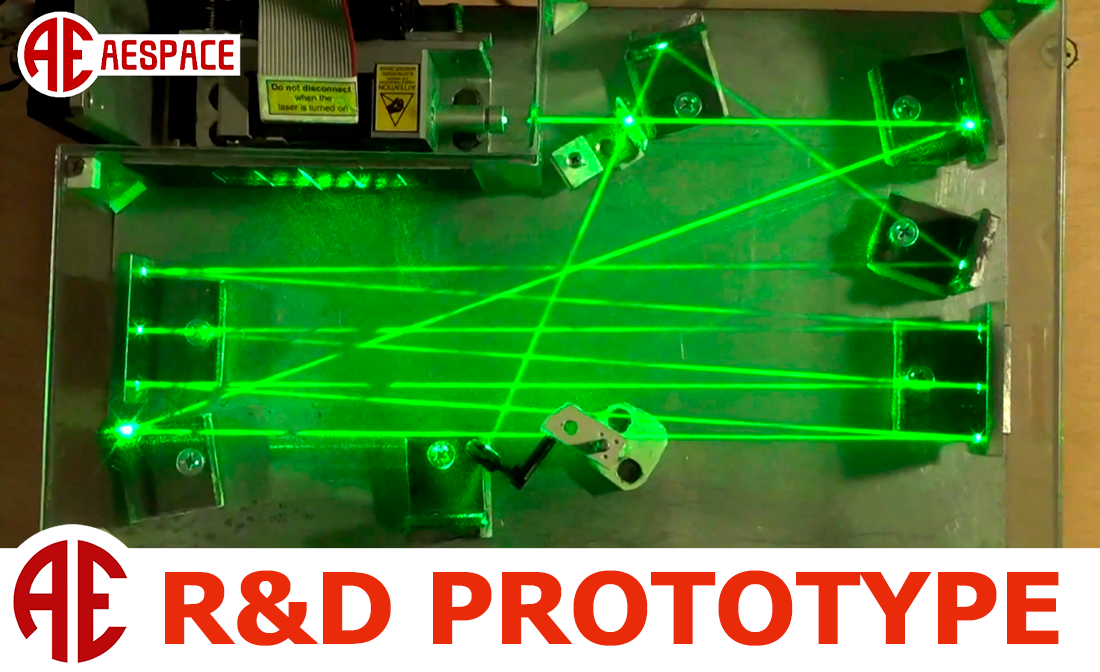
An experimental prototype of a device that generates a usable signal indicative of its own velocity and direction of motion, thereby enabling the device to determine its own position

Problem

Current propulsion systems rely on mass expulsion, creating fundamental limits: high fuel dependency, atmospheric constraints, low efficiency in outer space, complex engineering, and high operational costs.

To enable the next generation of mobility, fundamentally new propulsion principles are required.


Solution

The PFP Drive (Phase-Frequency Propulsion Drive) generates thrust without expelling mass, using controlled electromagnetic interactions with the quantum vacuum (wave medium).

It operates in both atmosphere and outer space using only onboard electrical energy, eliminating the need for propellant, aerodynamic lift, or combustion systems.


How It Works

🔶 Electromagnetic fields are configured in specific wave patterns to interact with the quantum vacuum (wave medium).
🔶 This interaction produces directed force without reactive mass.
🔶 AE SPACE has developed theoretical frameworks, computational models, and preliminary experiments validating these principles.


Why It’s Different

🔶 Unified principle for operation in air and space vacuum.
🔶 Removes propellant, turbines, propellers, wings, and fuel systems.
🔶 Simplifies architecture while maintaining scalable performance.
🔶 No other propulsion systems currently operate on this principle at scale.


Potential Impact

🔶 Propulsion independent of fuel and aerodynamic conditions.
🔶 Vertical takeoff and landing in diverse environments.
🔶 Lower system complexity and operational costs.
🔶 Higher efficiency and speed potential compared to conventional aircraft and spacecraft.
🔶 Early-stage development offers investors the opportunity to accelerate prototype validation and technology scale-up.

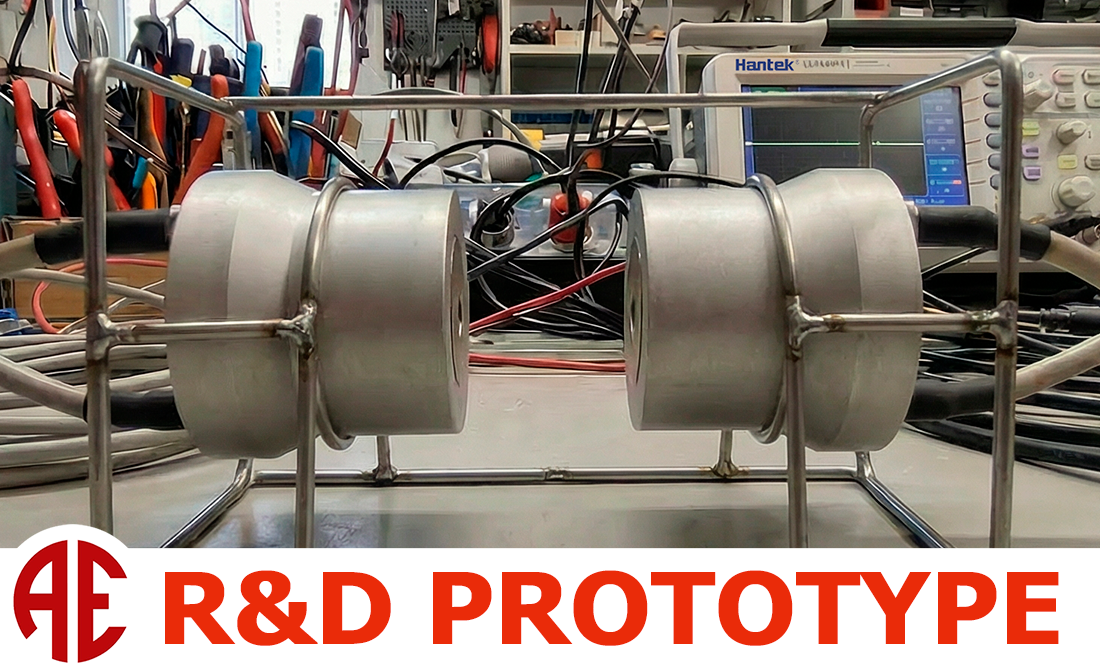
An experimental prototype of a device consisting of two emitters directed toward each other, which generate thrust

Problem

Modern civilization depends on centralized energy infrastructure: power grids, fuel supply chains, and charging networks.

This creates systemic constraints: limited availability, high cost, slow scalability, and vulnerability in remote or off-grid locations.

Current energy systems limit where and how humanity can live, move, and expand, including space exploration.


Solution

The PF Battery (Phase-Frequency Battery) generates electrical power directly from atomic structures of matter, without external infrastructure.

It is autonomous, designed for continuous operation over extended periods, enabling energy access anywhere — on Earth, in remote environments, or in outer space.


How It Works

🔶 Matter interacts as an active physical system.
🔶 Electromagnetic configurations access underlying energy states.
🔶 AE SPACE has developed theoretical frameworks, computational models, and preliminary experimental setups validating key principles.

Early-stage results indicate scalable, practical energy generation is achievable.


Why It’s Different

🔶 Fully independent from external power grids or fuel.
🔶 Continuous operation without recharging or conventional storage.
🔶 Functions in any environment, from off-grid Earth locations to space habitats.
🔶 No existing energy systems offer comparable autonomy and flexibility.


Potential Impact

🔶 Reliable off-grid power for remote communities and research stations.
🔶 Energy independence for electric transport, robotics, and autonomous systems.
🔶 Enabler for industrial and civil development in isolated regions.
🔶 Critical foundation for space habitats and interplanetary missions.
🔶 Early investment accelerates validation, prototype development, and scaling to practical energy applications.

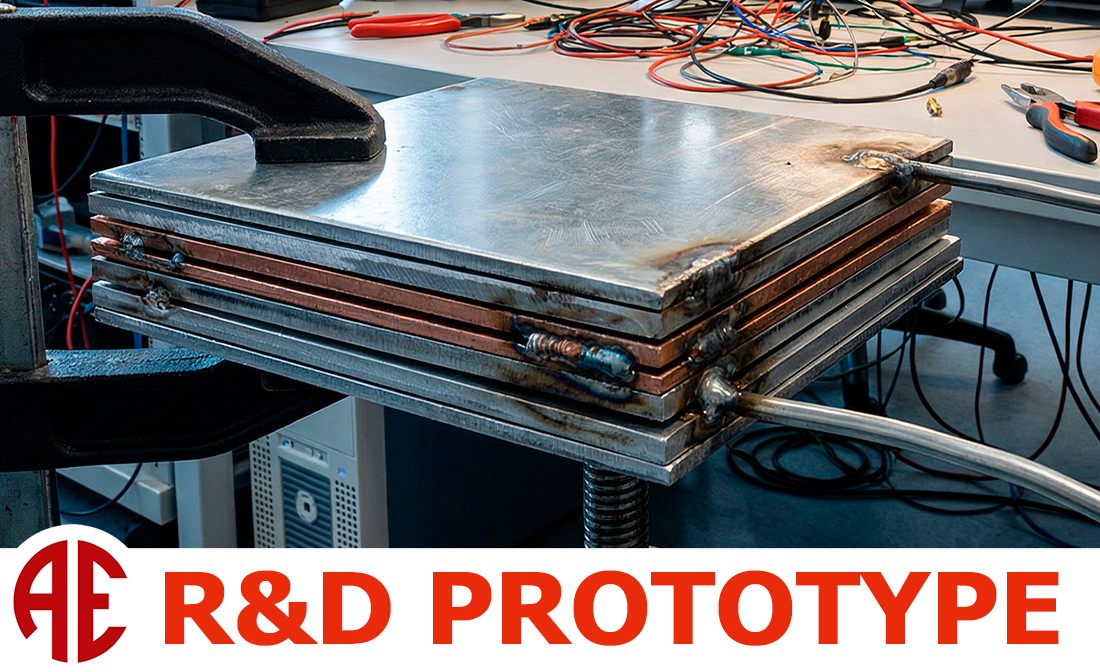
An experimental prototype of a device — a layered material assembly that generates an electric potential