From Scientific Foundations to Engineering Systems
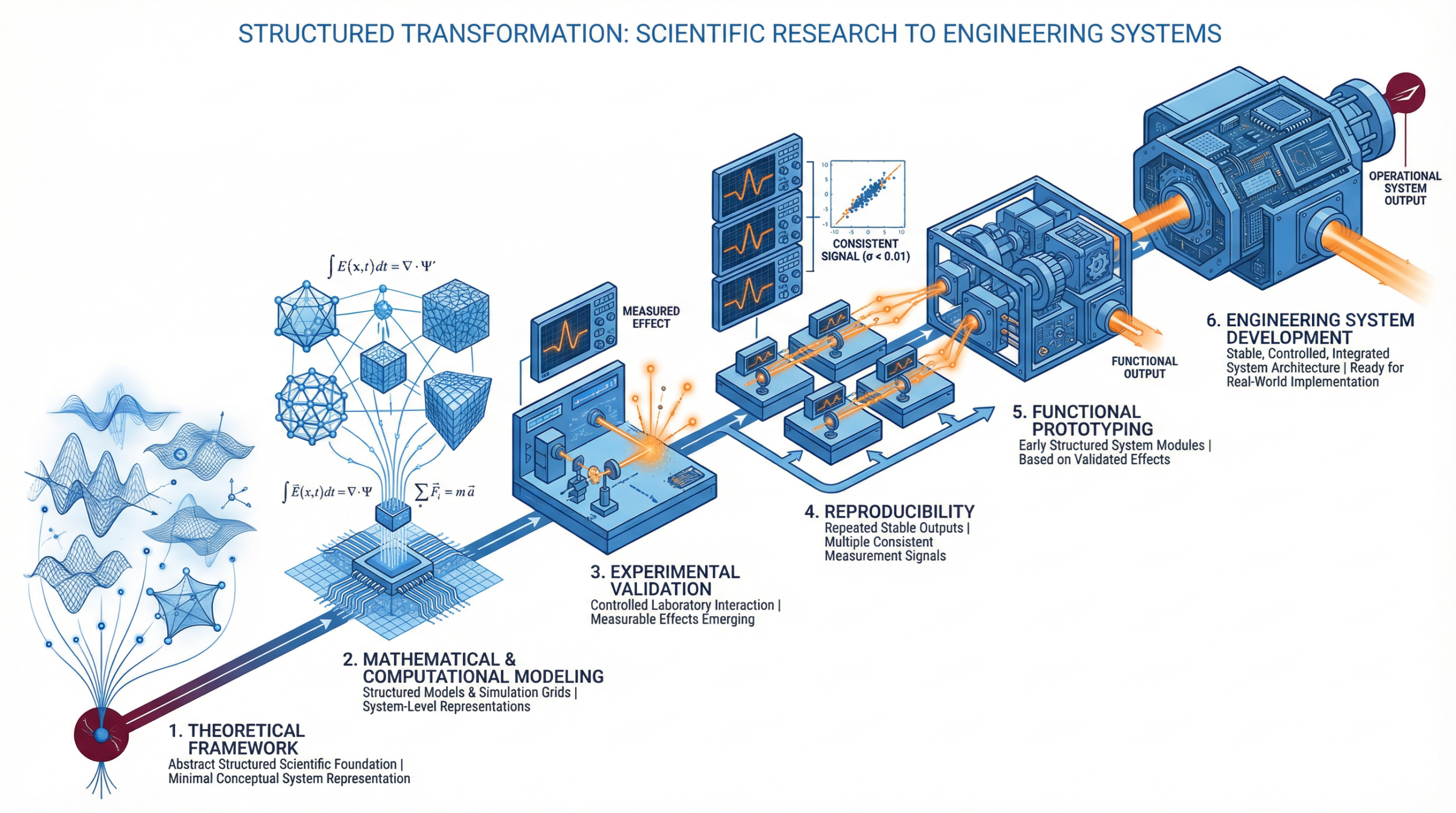
📕 AE SPACE follows a structured development pathway — progressing from validated physical effects to functional engineering systems.
The program is built on a controlled sequence of stages:
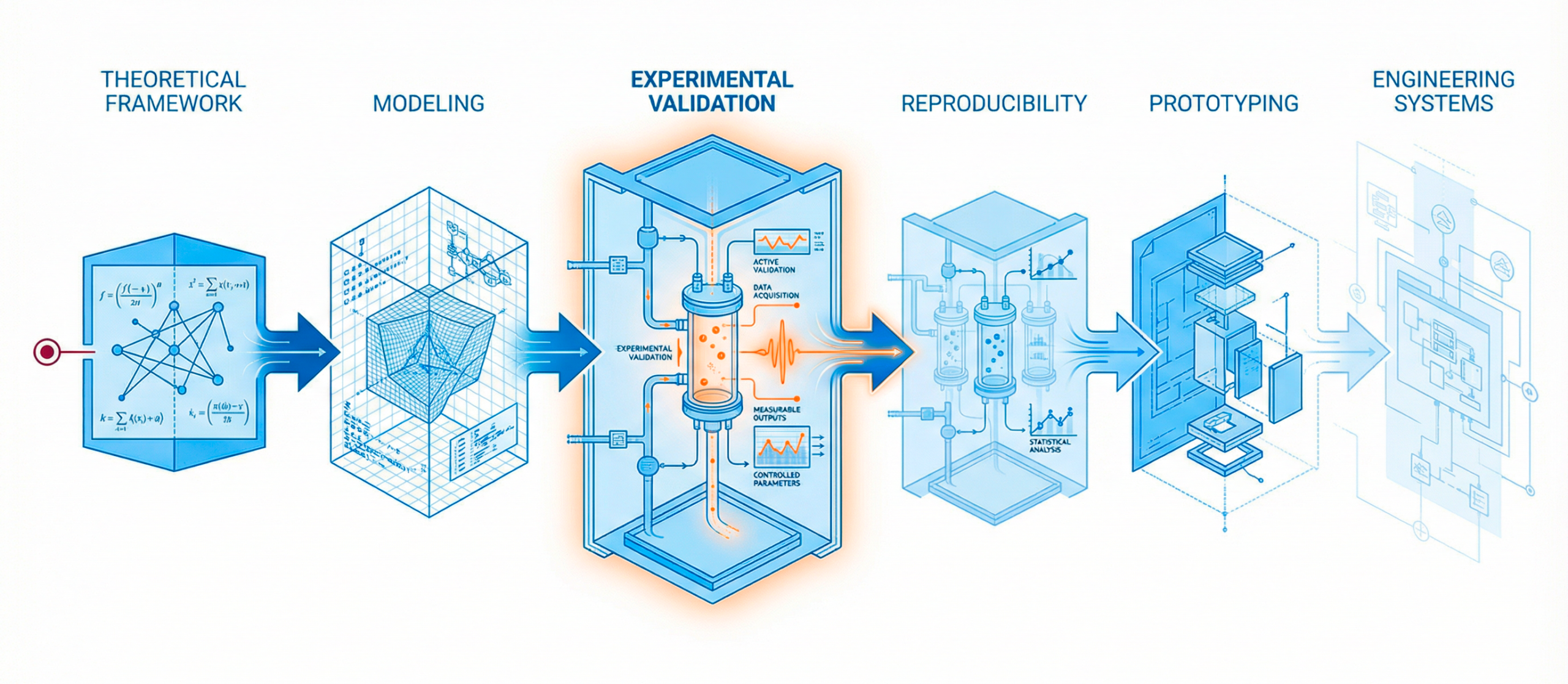
✔️ theoretical framework
✔️ mathematical and computational modeling
✔️ experimental validation of physical effects
✔️ reproducibility under controlled conditions
✔️ functional prototyping
✔️ engineering system development
Each stage is advanced only after achieving verifiable results from the previous one.
Current Position
AE SPACE has completed:
✔️ development of theoretical models
✔️ mathematical and computational simulations
✔️ initial experimental validation across multiple domains
The program is currently transitioning into controlled experimental systems, where reproducibility and measurement precision become the primary focus.
Phase #1: Controlled Experiments
Establishing stable, repeatable experimental conditions and isolating measurable effects.
✔️ reduction of interferometric noise and parasitic effects
✔️ deployment of high-precision measurement systems
✔️ reproducibility of observed effects across repeated trials
✔️ validation of propulsion-related effects in the SHF electromagnetic band
✔️ validation of energy transfer mechanisms in multilayer structures
Outcome: verified, measurable, and repeatable physical effects.
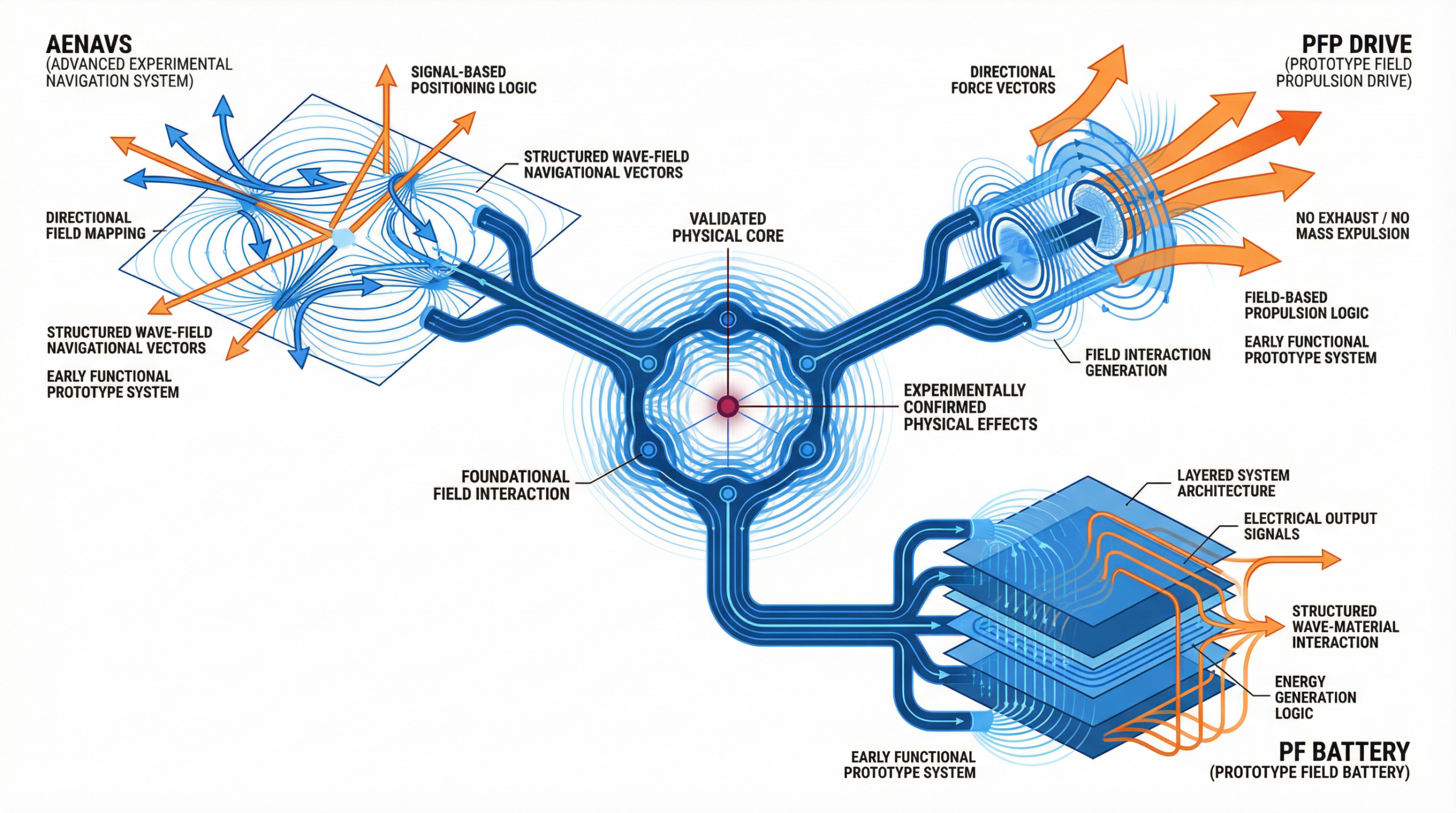
Phase #2: Functional Prototypes
Development of early functional systems based on validated effects.
✔️ AENAVS non-satellite navigation module (early prototype)
✔️ PFP electromagnetic propulsion module (early prototype)
✔️ laboratory-scale energy generation system
Outcome: first working systems demonstrating practical applicability.
Phase #3: Engineering Development
Transition from laboratory prototypes to stable engineering systems.
✔️ system stability and control
✔️ repeatability under real-world conditions
✔️ integration into functional platforms
Outcome: systems ready for controlled field testing and integration.
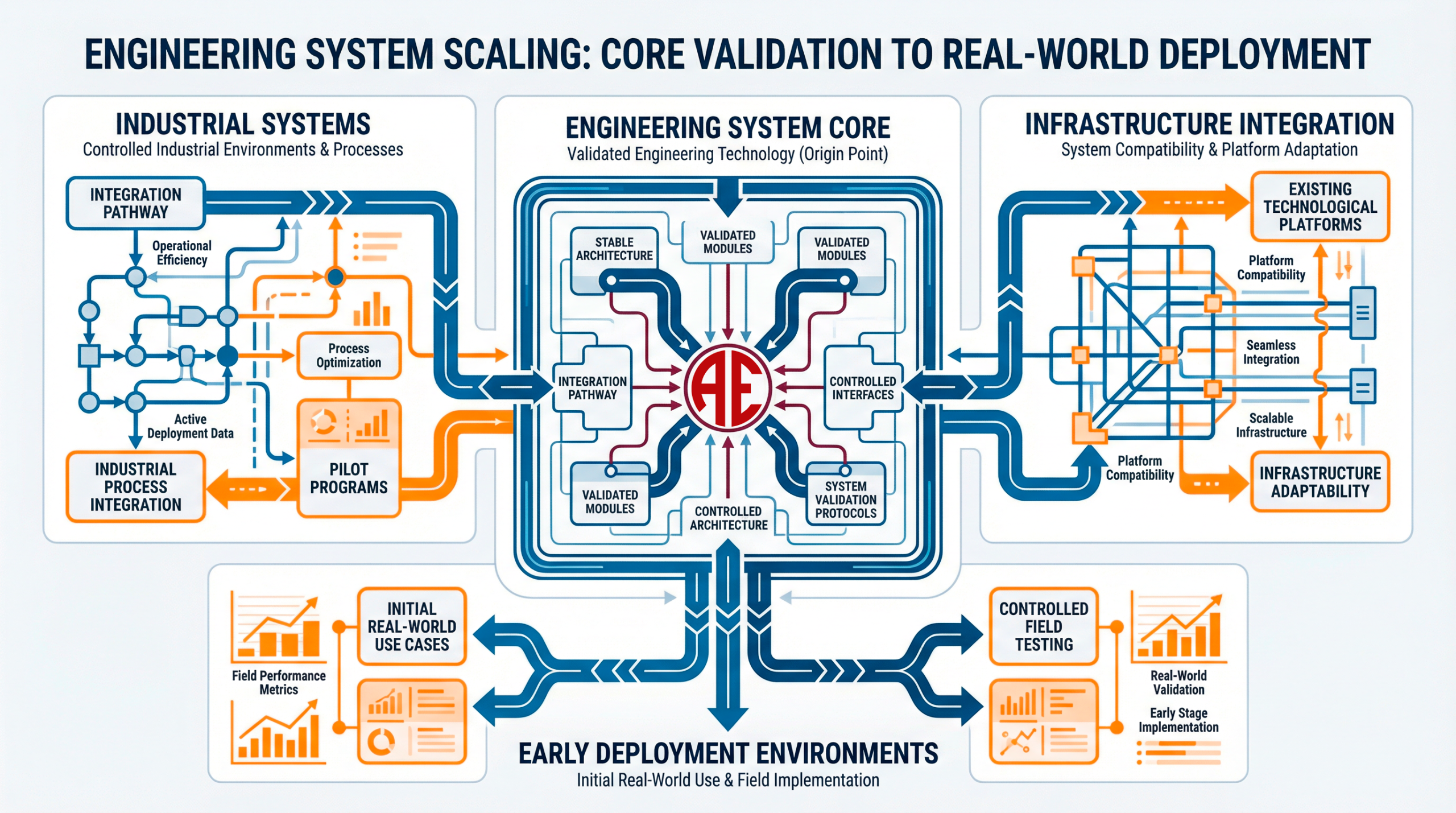
Phase #4: Scaling & Applications
Scaling validated technologies into real-world use cases.
✔️ industrial pilot programs
✔️ integration into existing infrastructure and platforms
✔️ early-stage deployment
Outcome: transition toward commercially viable systems.
Timelines
Due to the fundamental nature of the technologies, development timelines are tied to experimental validation rather than fixed assumptions.
However, based on current progress and technical planning:
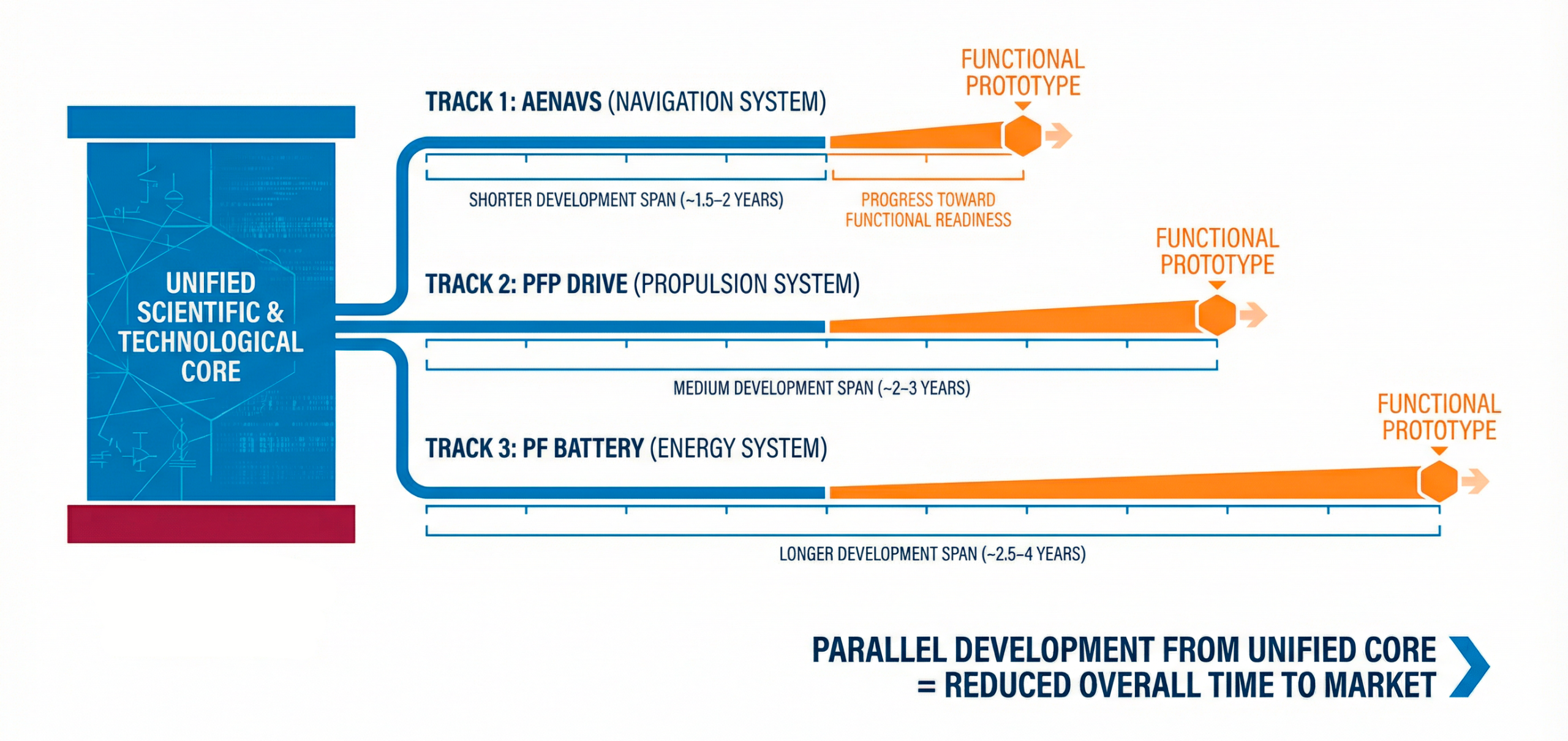
🔶 AENAVS – Autonomous Non-Satellite Navigation System: ~1.5-2 years to a functional prototype
🔶 PFP Drive – Electromagnetic Propulsion Drive Without Mass Expulsion: ~2–3 years to a functional prototype
🔶 PF Battery – Autonomous Energy Generation System: ~2.5–4 years to a functional prototype
A key advantage is that these technologies can be developed in parallel, as they originate from a unified theoretical and technological framework — significantly reducing total time to market.