From Theory to Experimental Systems
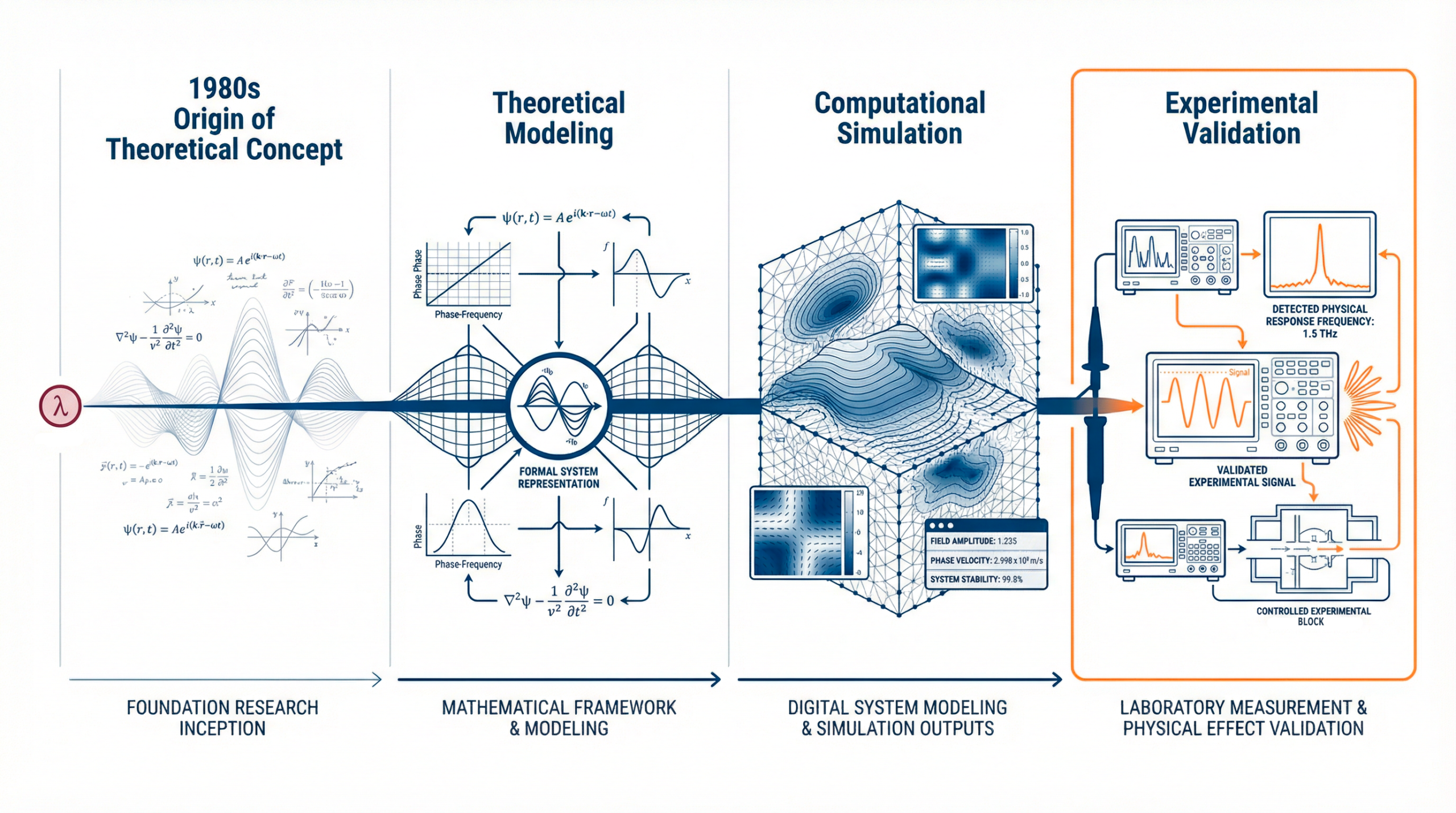
AE SPACE is built on a long-term scientific program exploring wave-based interactions in complex physical systems.
The research investigates whether controlled electromagnetic and oscillatory systems can produce measurable effects relevant to motion, force, and energy transfer.
The program originated in the early 1980s and has since evolved into a structured process of theoretical modeling, computational simulation, and experimental validation.
Key principle: all concepts are treated as testable hypotheses and are advanced only through measurable experimental results.
Theoretical Framework
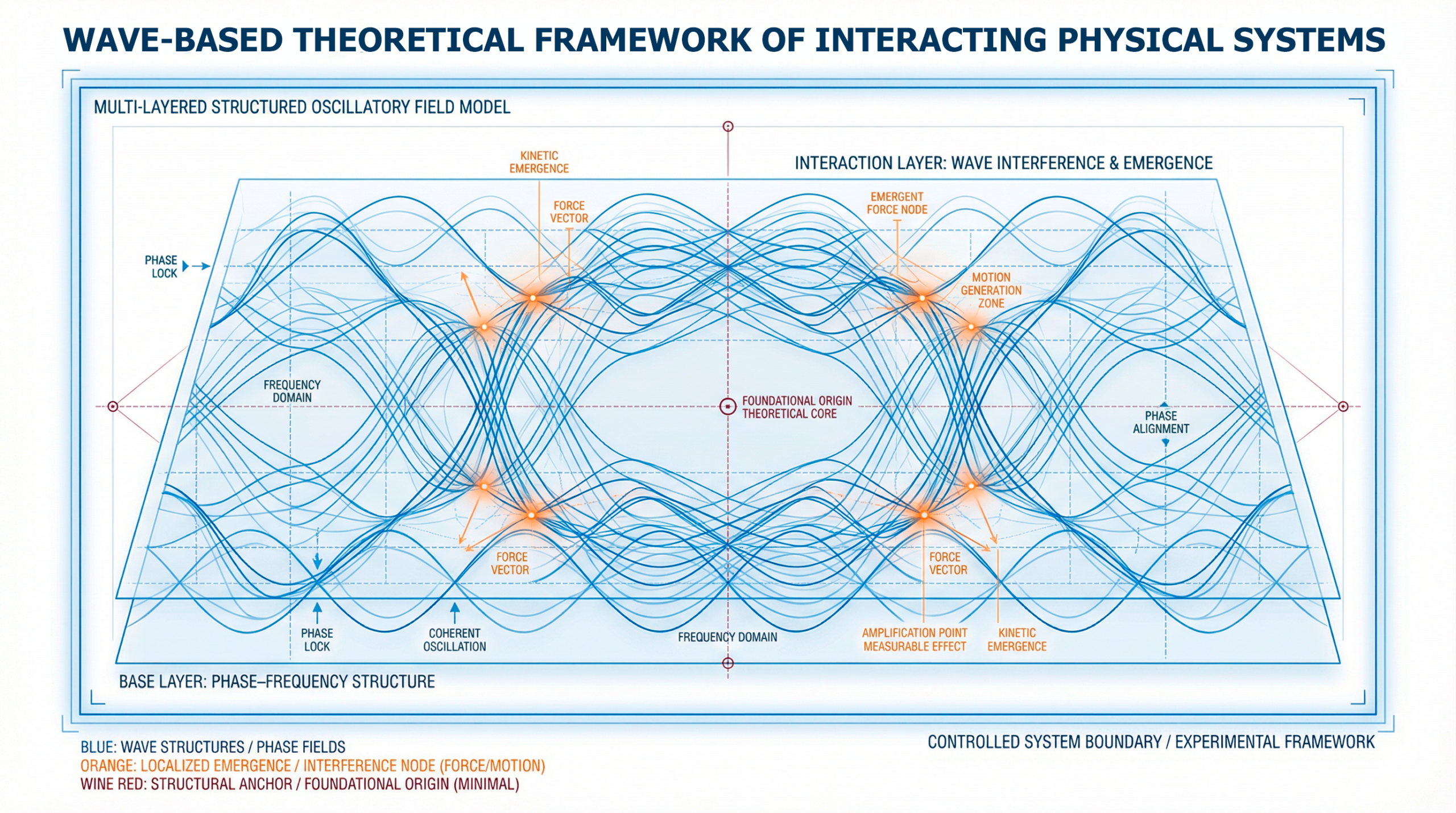
The research is based on a wave-oriented framework (Rhythmodynamics), which models physical systems as interacting oscillatory structures.
Within this approach:
▶️ physical systems are described through phase–frequency relationships
▶️ force and motion are modeled as emergent effects under specific wave conditions
▶️ wave interactions are analyzed within controlled experimental contexts
The framework serves as a working model to guide simulations and experiments — not as a replacement for established physics, but as an extension under investigation.
Experimental Validation
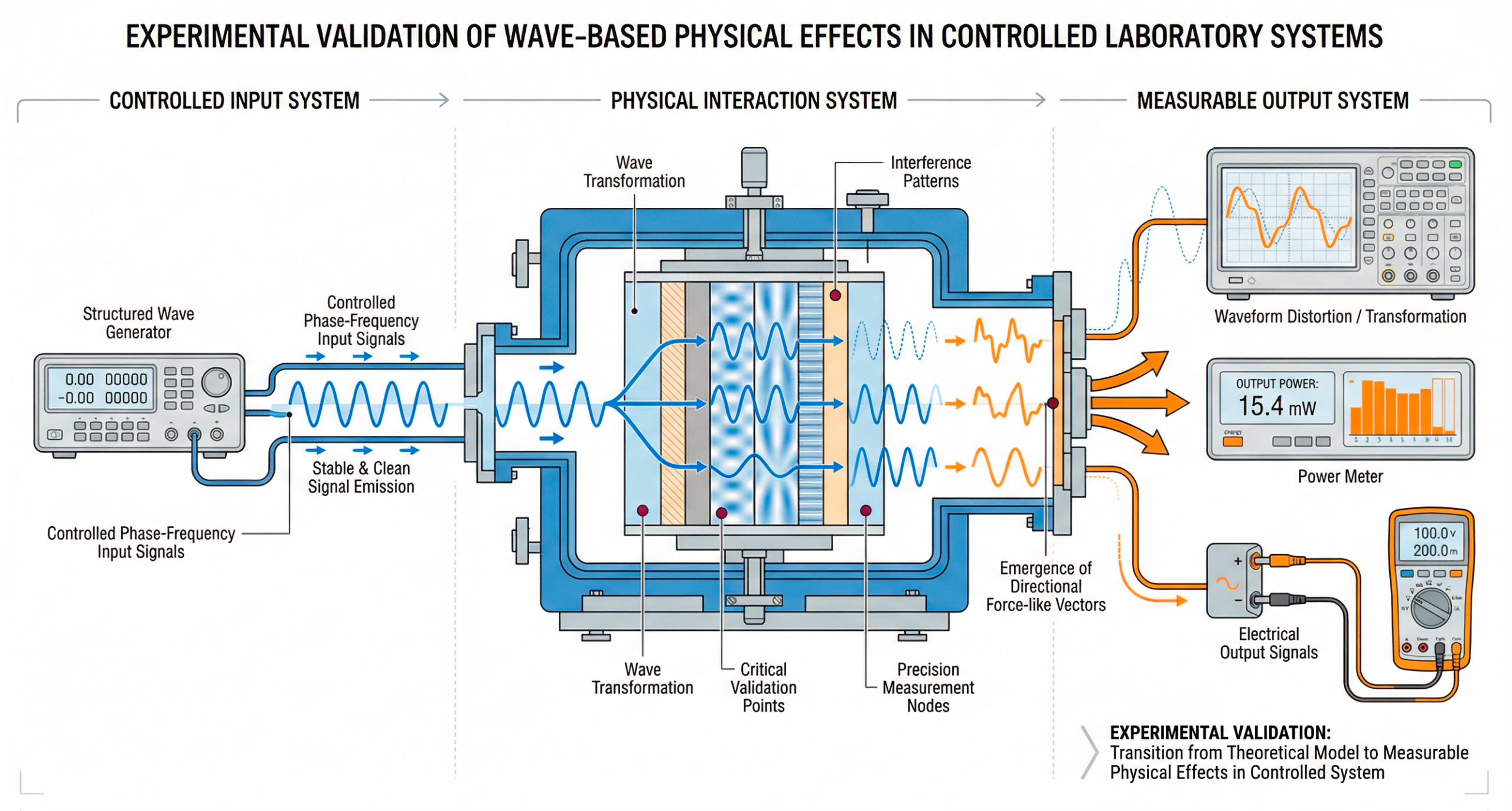
Experimental work focuses on identifying and reproducing measurable effects in controlled systems.
Observed results include:
▶️ measurable changes in wave structures under motion and acceleration
▶️ force-like effects under controlled phase–frequency asymmetry
▶️ electrical output in layered material systems under specific wave conditions
These effects have been reproduced in laboratory environments and are currently being refined with improved measurement precision and noise reduction.
Core Scientific Directions
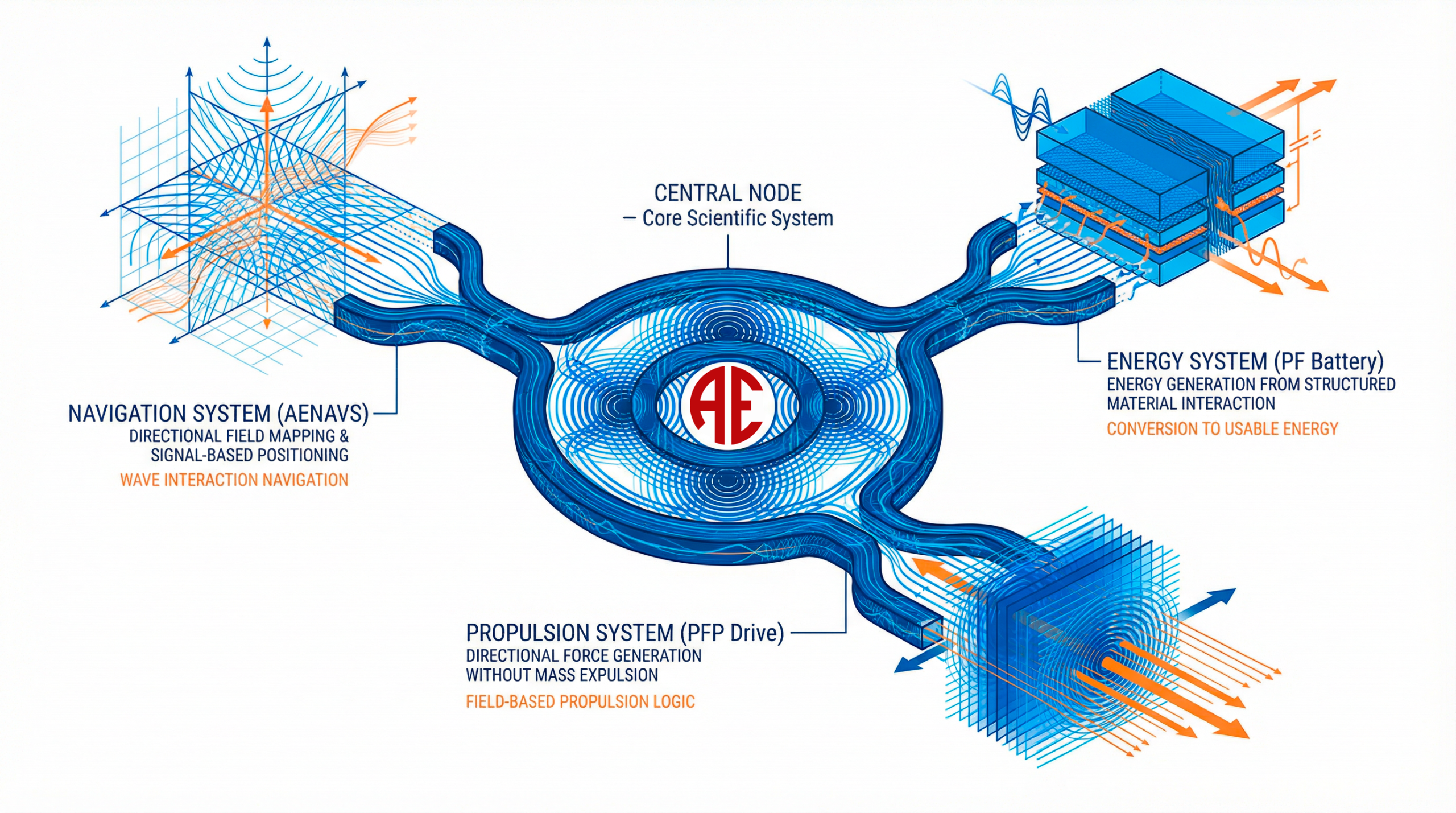
Based on validated and observed effects, AE SPACE is advancing three primary directions:
▶️ navigation based on light-wave interaction effects
▶️ electromagnetic propulsion without conventional mass expulsion
▶️ energy generation systems based on structured material interactions
All directions are being developed through iterative experimental validation.
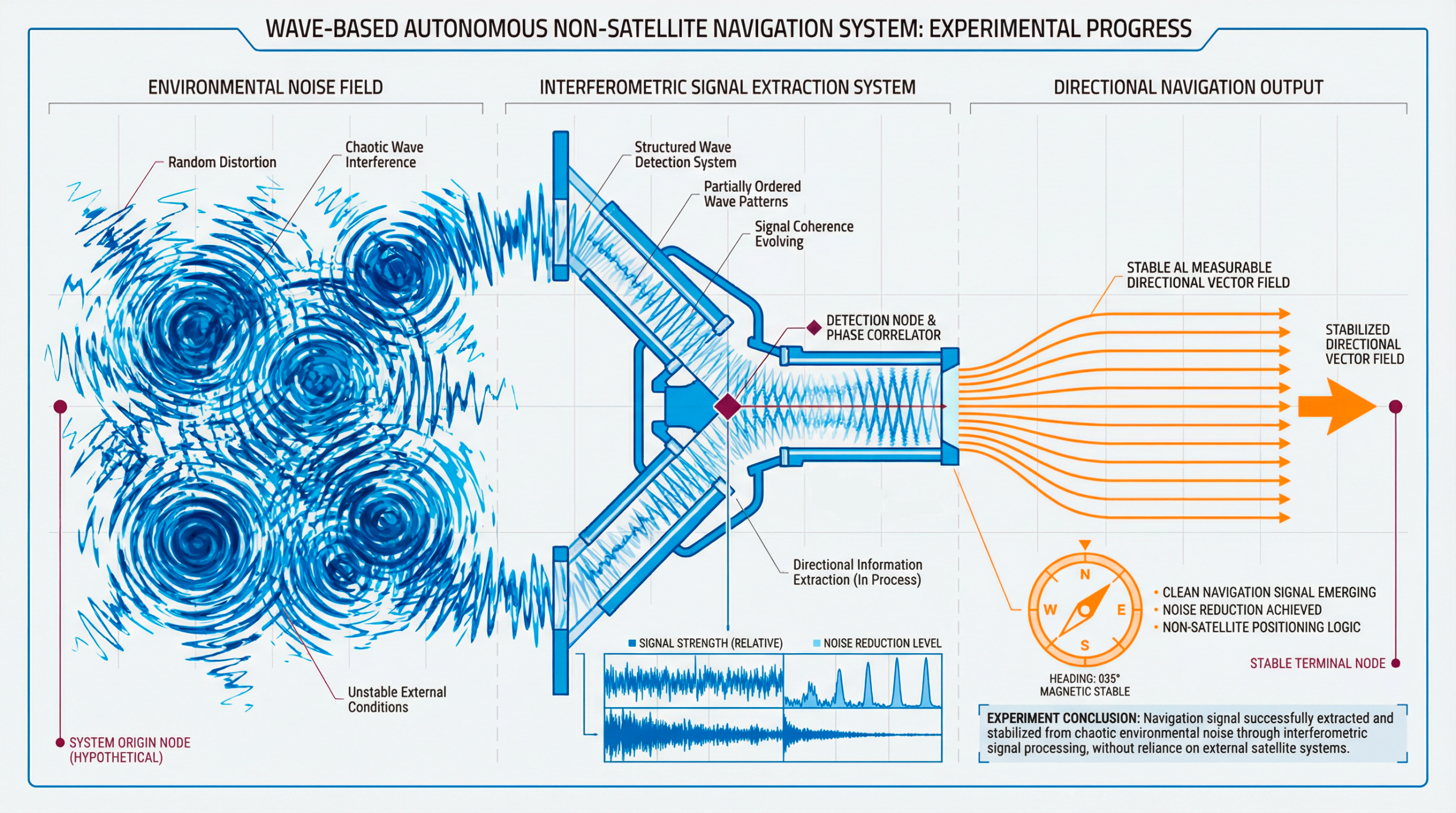
🔶 AENAVS — Autonomous Non-Satellite Navigation
Current Status
▶️ interferometric systems developed and tested
▶️ measurable directional signals detected
▶️ signal quality currently limited by environmental noise
Next Step
▶️ noise reduction and signal stabilization
▶️ controlled testing (including free-fall acceleration conditions)
▶️ development of first functional prototype
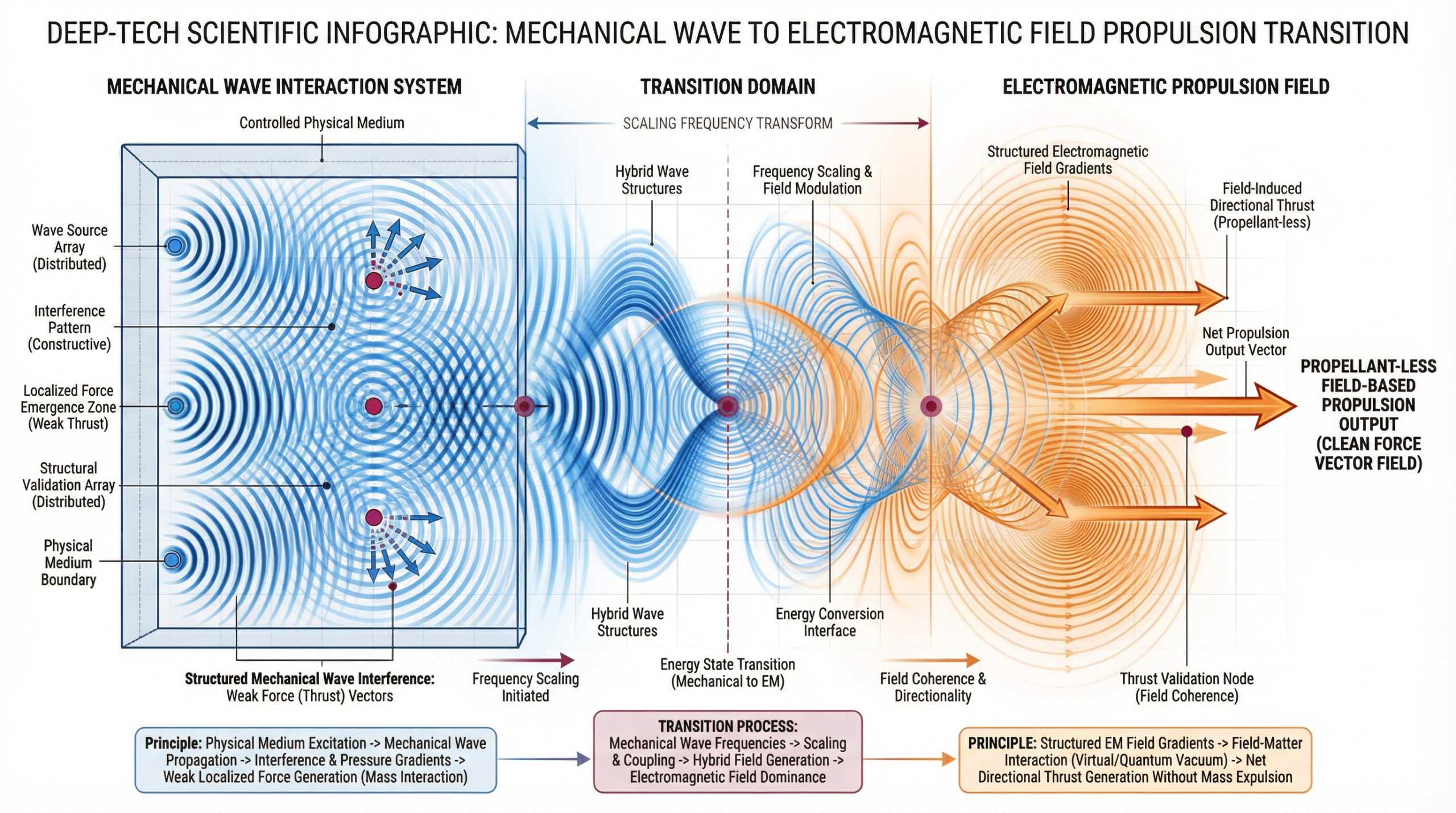
🔶 PFP Drive — Electromagnetic Non-Jet Propulsion
Current Status
▶️ force-like effects observed in mechanical wave systems
▶️ repeatable results under controlled conditions
Next Step
▶️ transition effects to high-frequency electromagnetic systems
▶️ validation in EM domain
▶️ development of early propulsion prototype
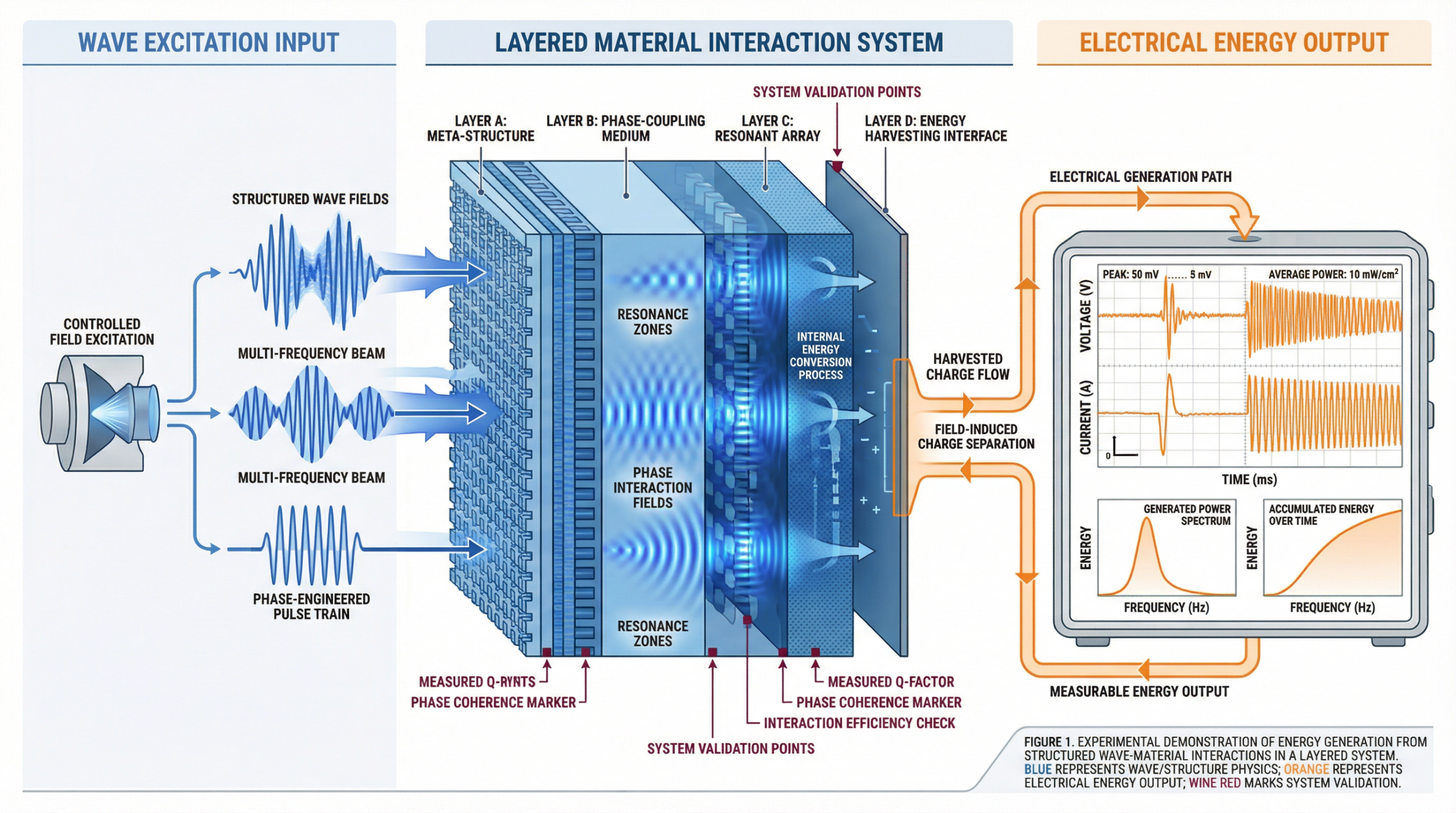
🔶 PF Battery — Autonomous Energy System
Current Status
▶️ measurable electrical output observed in layered material systems
▶️ proof-of-concept effects demonstrated
Next Step
▶️ optimization of material configurations
▶️ controlled parameter tuning
▶️ development of scalable prototype
Approach
AE SPACE operates through a disciplined scientific process:
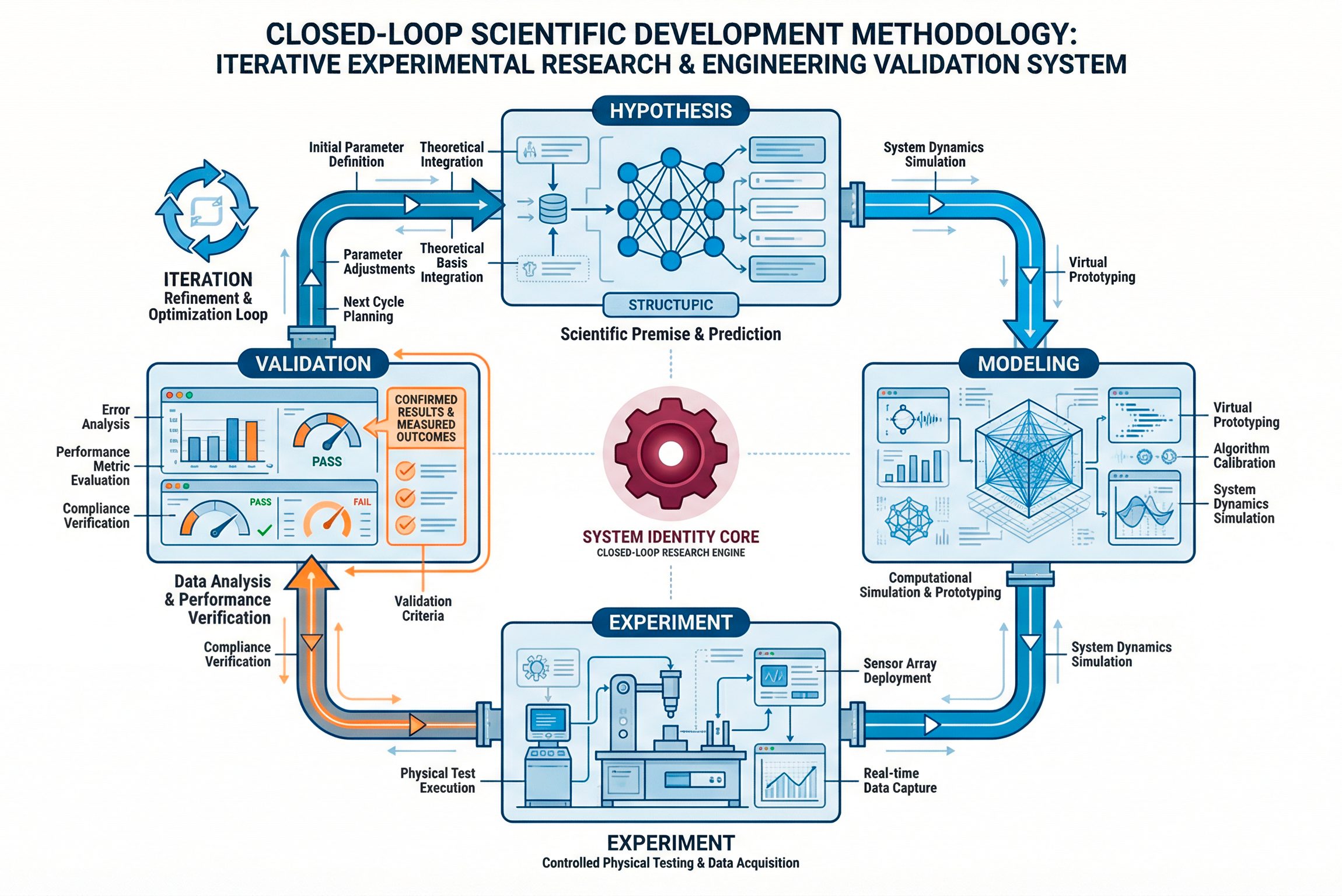
HYPOTHESIS ➡️ MODELING ➡️ EXPERIMENT ➡️ VALIDATION ➡️ ITERATION
Progress is driven by reproducible results and measurable effects, ensuring a controlled transition from scientific research to engineering systems.